
SRF cavity processing and R&D capabilities
To support leading scientific research in superconducting RF and advanced cryomodule production, Fermilab maintains comprehensive SRF capabilities, including full life-cycle treatment of cavities and cryomodules from design to production. The SRF Program focuses on understanding the phenomena that limit SRF cavity performance and developing innovative surface treatments to achieve higher quality factors and accelerating gradients.
Integrated R&D across the SRF lifecycle
The full cycle of SRF cavity processing, from the first chemistry through cryogenic measurements in vertical dewars at the Vertical Cavity Testing Facility, is supported by a team of world-class scientists, engineers and technicians. The team conducts a wide range of R&D activities focused on SRF technology which include:
- Niobium material research
- SRF cavity processing and surface inspection
- Development of advanced surface processes and novel SRF materials
- RF and mechanical design and optimization of cavities and auxiliary components
- Novel fabrication and assembly methods
- SRF cavity resonance control
- Cryogenic horizontal tests of SRF cavities at the Cavity Test Cave
- SRF cryomodule assembly
These activities are carried out in close coordination with other SRF groups and in collaboration with multiple partners to achieve the goal of delivering SRF cavities and cryomodules to key projects.
Technical areas in SRF technology
The world-class facilities and wide spectrum of expertise are described in the following sections:
Vertical testing of cavities | Horizontal testing of cavities | Cavity surface processing | Cavity post-processing | Cavity string and cryomodule assembly | RF design and test | Cryomodule engineering | Optical inspection and Eddy current scanning | Material studies
Vertical testing of cavities
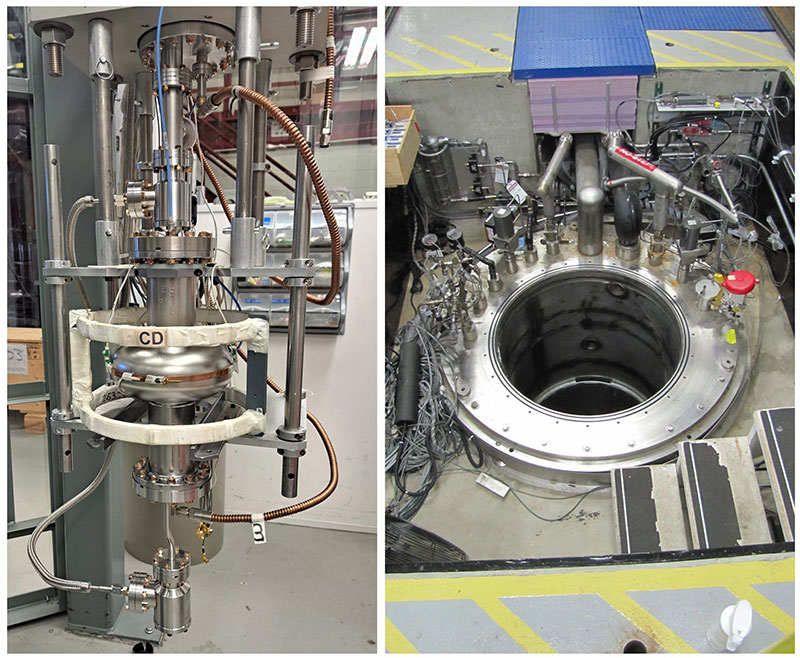
Fermilab’s SRF Vertical Test Stand Facility encompasses three large liquid helium dewars, each of which can test multiple production-style cavities simultaneously. The RF control system is capable of high power operation over a wide frequency range, and the cryogenic system can cool liquid helium baths as low as 1.4 K.
Advanced diagnostic equipment includes second sound quench detection system, temperature mapping system for single cell cavities, and externally controlled magnetic field environment.
Horizontal testing of cavities
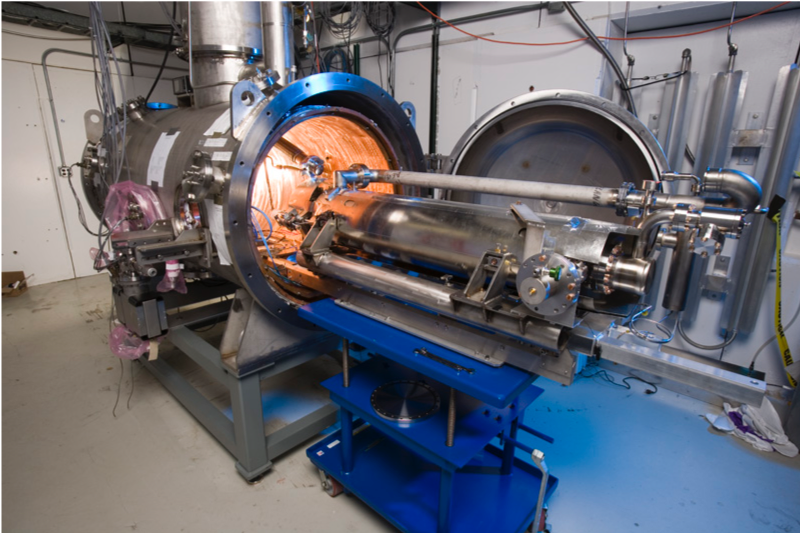
After a cavity treatment has been qualified, it may then be evaluated in the Horizontal Test Facility, to make sure that it works well with all auxiliary components to achieve the required performance.
In preparation, the cavity is equipped with additional components such as tuners which maintain the cavity at the desired operating frequency, high power couplers that are used to power the cavity, and other ancillary systems that are needed to ensure the cavity will perform well in the accelerator. Fermilab has established three test stands at HTF designed to test different types of accelerating cavities.
Cavity surface processing
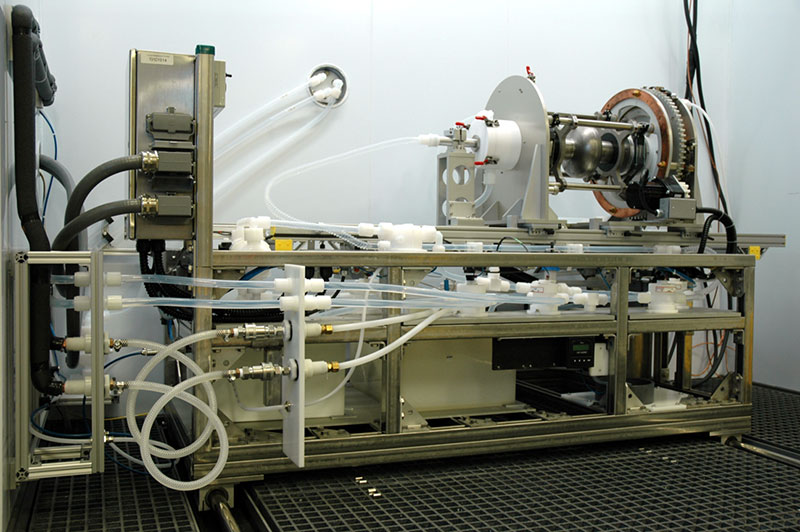
High quality polishing is essential to deliver maximum accelerating gradients and high quality factors in SRF cavities. Chemical processing of superconducting cavities is mainly used to remove contaminants from the Niobium surface.
Fermilab capabilities include electropolishing, buffered chemical polishing, and centrifugal barrel polishing for a wide variety of cavity types. Surface processing facilities are located in the Cavity Processing Lab in IB4 and the joint cavity surface processing facility at Argonne National Laboratory.
Cavity post-processing
Heat treatment facilities
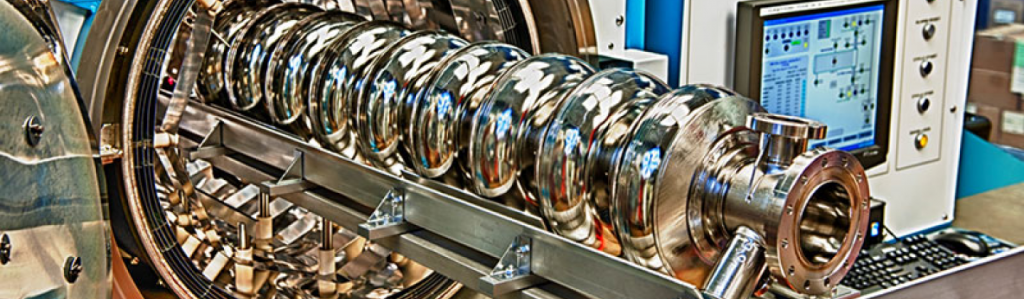
Two high temperature vacuum furnaces and two low temperature ovens are used to perform heat treatments on SRF cavities. A major focus is to develop and optimize recipes and create new Niobium (Nb) compounds aimed at reducing RF losses in the cavities which can dramatically reduce operating costs. Other important applications of heat treatment are hydrogen degasification, annealing and mild baking to remove high field Q-slope.
Class 100 Clean Rooms
SRF cavity cleanroom assembly capability is essential to good cavity performance. Fermilab clean rooms contain automated high-pressure rinsing tools used for cleaning the interior surface of cavities. They are also used to assemble cavities and pump them down to ultra high vacuum. Cleanroom facilities are located in IB4, Lab 2 and the joint cavity surface processing facility at Argonne National Laboratory.
Cavity string and cryomodule assembly
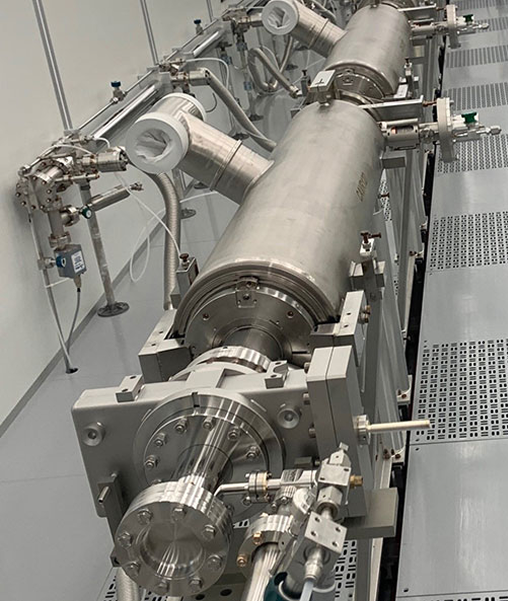
APS-TD has two independent cavity string assembly facilities located in MP9, the largest clean room at Fermilab, about 250 square meters, and in Lab 2. Each contains clean-room areas with several levels of cleanliness.
- Class 1000 (ISO6) ante cleanroom area: Preparation of the dressed cavities for transportation into the assembly cleanroom.
- Class 100 (ISO5) sluice area: Parts and Fixtures final preparation to enter the Class 10 assembly area.
- Class 10 (ISO4) assembly cleanroom area: Where the cavity vacuum is vented to interconnect them with bellows.
Production floor areas for cryomodule assembly are located in ICB and Lab 2.
RF design and test
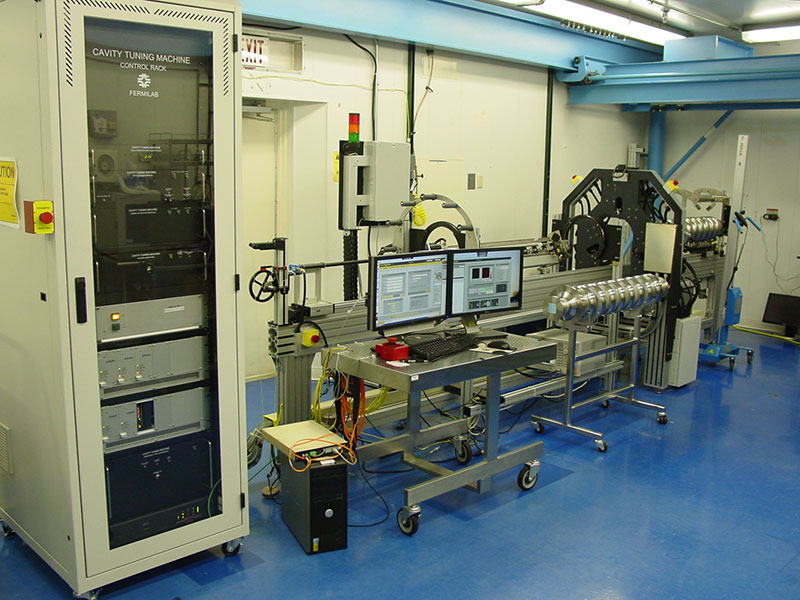
The central part of any particle accelerator is the accelerating structure or RF cavity. Successful operation of cavities requires optimized design, precise production and low-power RF tuning. The team has tools for providing superior design, precise measurements and tuning of accelerating cavities for both prototyping and production.
The simulation codes HFSS, COMSOL, CST and ANSYS are installed on specialized APS-TD servers to allow the team to increase design efficiency by performing advanced analysis for optimized cavity design. Optimization includes reducing peak surface fields, mitigating multipacting, extracting and damping higher-order modes, minimizing microphonic sensitivity and Lorentz force detuning, and analyzing structural and thermal stability and multipole beam effects.
The lab’s sophisticated RF measurement equipment and tuning tools allow the team to work with different types of RF cavities across a wide frequency range. APS-TD is responsible for RF testing and quality control on all cavities received from vendors as part of the qualification process for cryomodule operation. This includes monitoring key cavity performance parameters such as frequency spectrum, field flatness, eccentricity and physical length.
Cryomodule engineering
Cryomodules are vacuum-insulated assemblies of superconducting RF cavities and related hardware, including instrumentation and often a superconducting magnet package. A cryomodule is the fundamental building block of a superconducting RF accelerator. These complex assemblies present numerous challenges for engineers and designers.
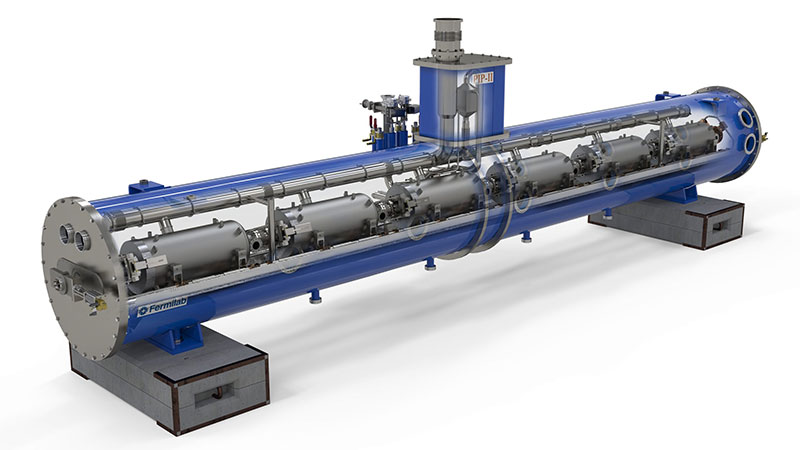
Cryomodules provide support, precise alignment, and thermal and magnetic shielding for the dressed cavities, as well as feedthroughs from the outside environment to low temperatures for RF power and instrumentation.
A cryomodule must provide the required insulating and beam vacuum and offer robust support with minimal cavity vibration and reliable cavity alignment during thermal cycling. The design cools the RF cavities to superconducting temperatures and protects the helium and vacuum spaces, including the RF cavity, from exceeding allowable pressures. Designing cryomodules requires a broad range of mechanical, thermal and electrical engineering skills and experience.
Optical inspection and Eddy current scanning
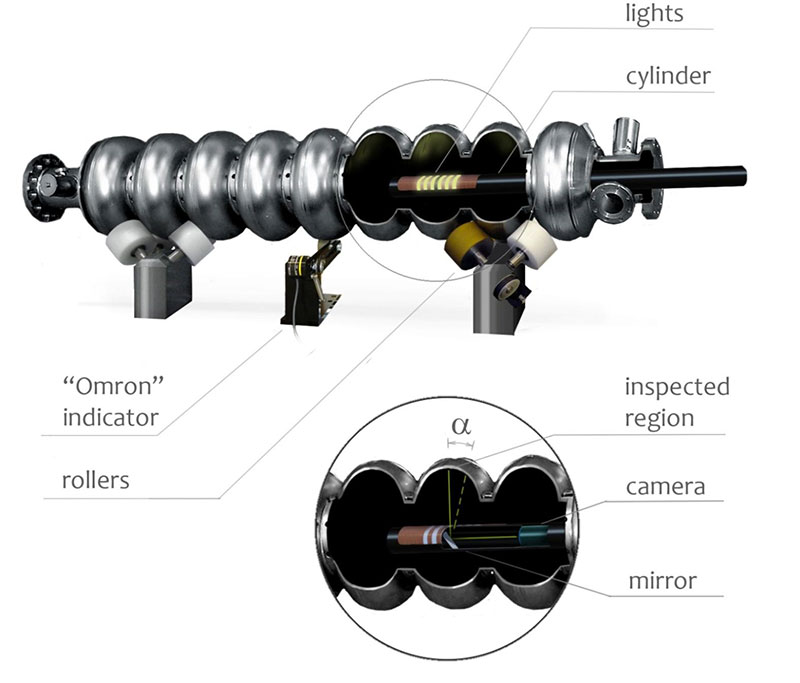
The optical inspection system includes a camera and lighting system mounted to a rod that is inserted into the cavity.
It’s used for routine inspection of cavities during the processing cycle, as well as computer-aided, close inspection of specific regions of interest. Eddy current scanning is used to examine niobium sheets before cavity fabrication to check for impurities.
Material studies
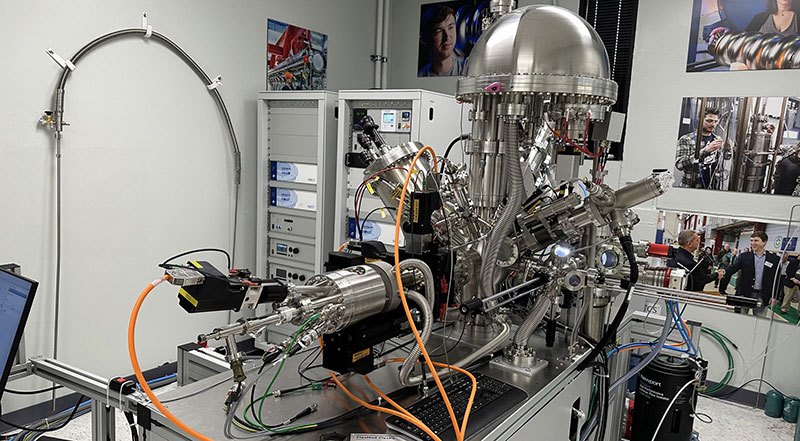
A wide range of materials study tools are used, including time-of-flight secondary ion mass spectrometry, X-ray photoelectron spectroscopy, ultraviolet photoelectron spectroscopy, Auger electron spectroscopy, scanning electron microscopy with energy-dispersive X-ray spectroscopy and electron backscatter diffraction capabilities, focused ion beam, physical property measurement system, Instron tensile testing, Keyence confocal laser scanning microscopy and surface topological replicas. Chemical treatment of samples is also a critical capability.